

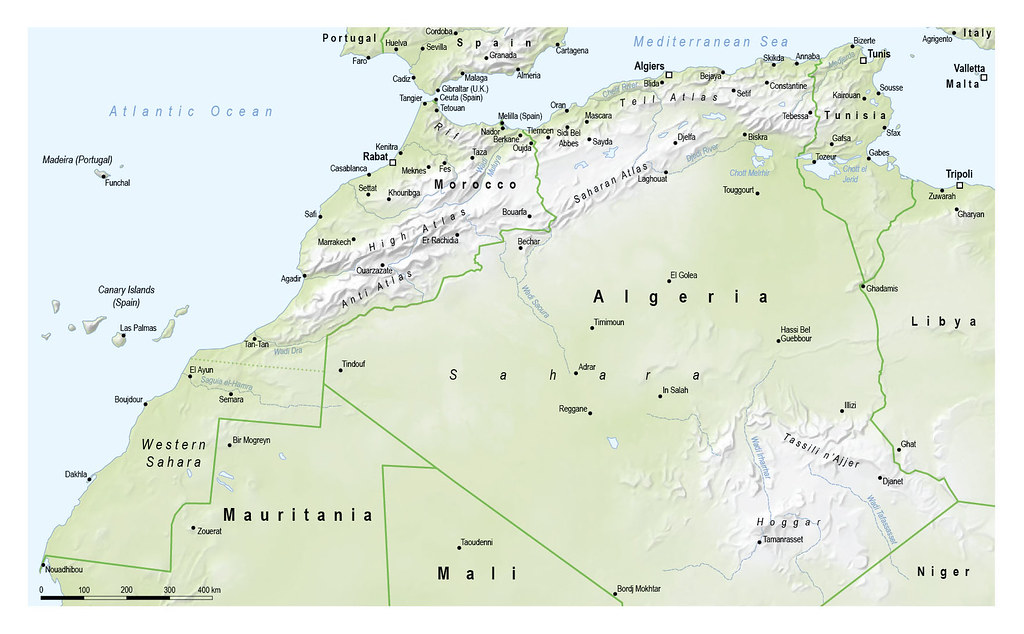
The situation of West African megafauna is critical, both for large carnivorous mammals and for large herbivores. Senegal's Niokolo Koba National Park (9139 km²) is one of the last refuges for this emblematic faunal group in this forgotten region of the African continent. Among the large carnivores, it is home to the most important population of the critically endangered West African lion (Panthera leo), the last known population of African wild dog (Lycaon pictus) in this African eco-region, as well as significant numbers of leopard (P. pardus) and spotted hyena (Crocuta crocuta). Among the large herbivores, the most notable are the probably last global population of Derby's eland (Taerotragus derbianus), the roan antelope (Hippotragus equinus) and the hippopotamus (Hippopotamus amphibius).
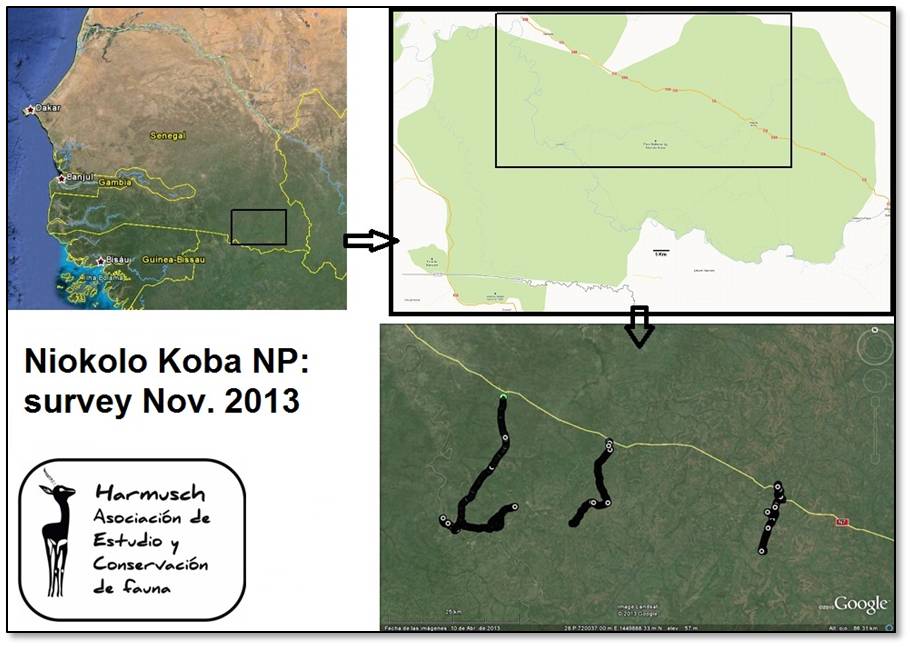
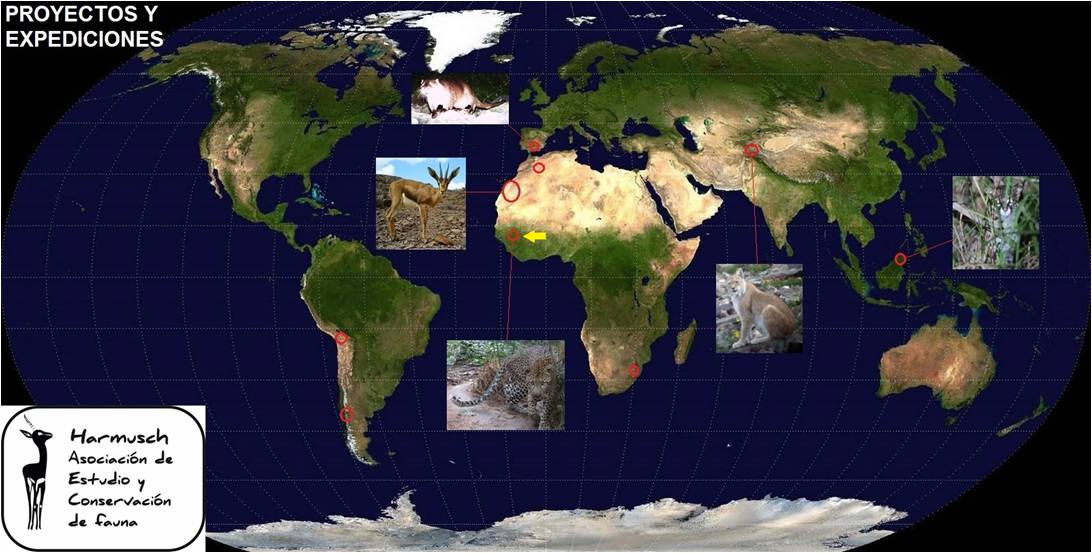
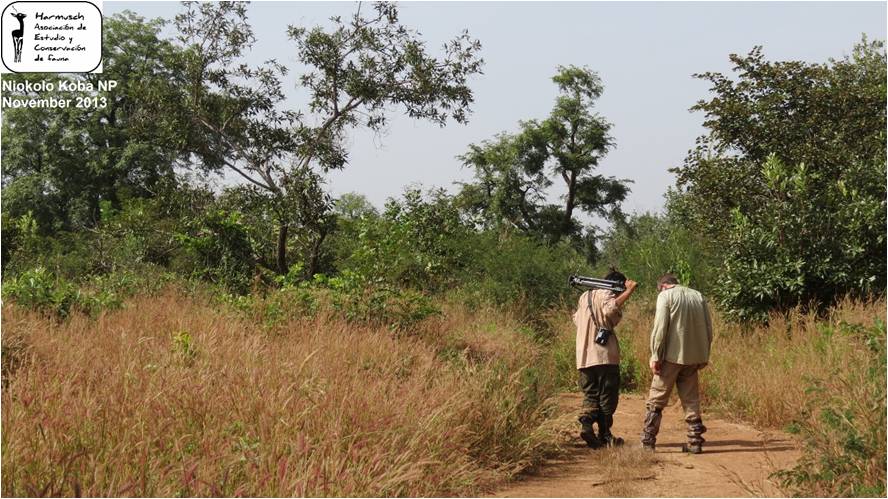
In 2013, Harmusch took part in the development of a megafauna inventory project, proposed for several West African countries and led by Professor Claudio Sillero (Oxford University). Harmusch was going to be in charge of the survey of Niokolo Koba National Park, although unfortunately the submitted project did not obtain the necessary funding and has been postponed for future calls. At least, we were able to make a brief reconnaissance visit from November 9 to 23, 2013.
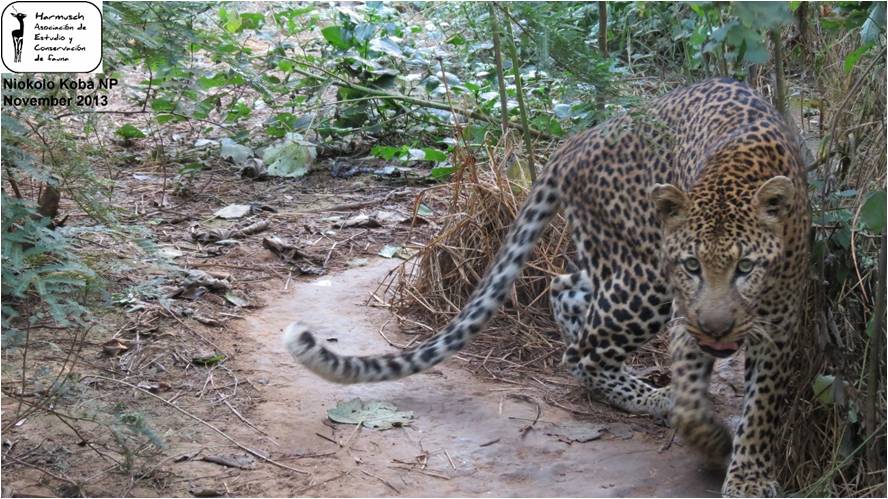
LARGE CARNIVORES. The effort was very limited and the park conditions were awful (end of the rainy season, with very tall and dense herbaceous vegetation). Despite these limitations, lions were located by tracks in at least two places, leopard tracks in two or three points, and those of a group of at least four African wild dogs; spotted hyena was found on most of the routes.
The collected data made it possible to distinguish three lion breeding units with a minimum count of 12 individuals, a figure that would not support the most recent scientific data, which estimate 16 lions in the entire park.
LARGE UNGULATES. Despite the poor conditions for surveying ungulates, it was not difficult to detect three of the four species present. The most common was the roan antelope (in 100% of the routes), followed by the northern waterbuck (42.8%) and Derby's eland and buffalo confirmed on one route. Other species frequently observed were Uganda kob, hartebeests, red duikers, oribis, and warthogs.
Keywords
Methodology
- Survey routes: 7 vehicle transects (124.2 km) + 4 foot transects (14.2 km)
- Interviews with local population: Specific consultation with rangers about recent lion data
Results
- Carnivores detected: Lion (min. 12 individuals, 3 breeding units), leopard (2-3 locations), African wild dog (group of at least 4), spotted hyena (frequent)
- Ungulates: Roan antelope, waterbuck, Derby's eland, buffalo, Uganda kob, hartebeests, red duikers, oribis, warthogs
Collaborators
- University of Oxford (Prof. Claudio Sillero)
- Niokolo Koba National Park
- Campament Hôtel Wassadou